Jewish Dungeons & Dragons
Welcome
You are joining an adventure that is old and new.
What makes it old? One of the world’s longest running story based community learning activities is Torah study. The Rabbis who saved Judaism 2000 years ago were serious scholars yet also courageous with their creativity. They wrote stories where Moses confronted an ancient Giant in the desert and described a supernatural worm able to bite through stones. These stories were part of transforming a people who did animal sacrifice in their worship into a people who now care about Tikkun Olam (repairing the world) and many other personal and intellectual concepts.
Now, we will use these stories to inspire our games. Dungeons & Dragons is relatively new, at only 50 years old, and it has created a global phenomenon of people creating stories and games at the same time. In this game, we get to play with the folklore of Jewish tradition and enter into the stories like never before.
So the newest part of all will be when we get together and make the heroes and the history come to life.
Think you are ready? I’ve got the dice, the pencils, and a story to tell. You bring a little chutzpah and let’s go!
Method
- Jewish Dungeons & Dragons (JD&D) is a tabletop role playing game that I can bring to your community in person or through a virtual interface.
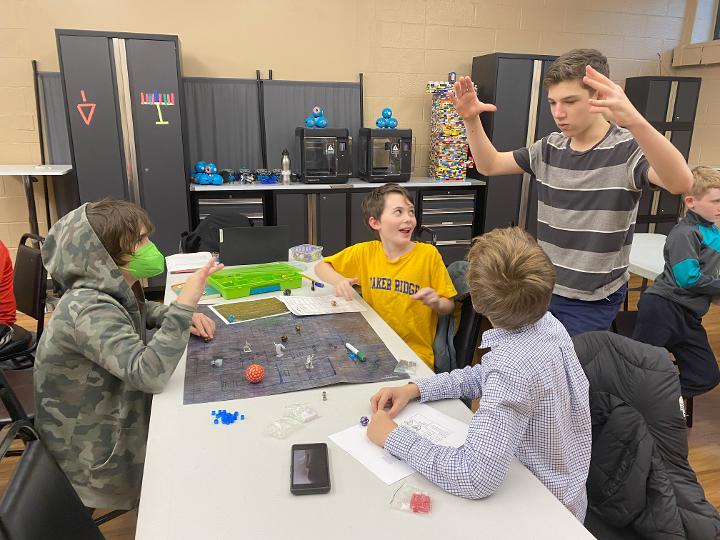
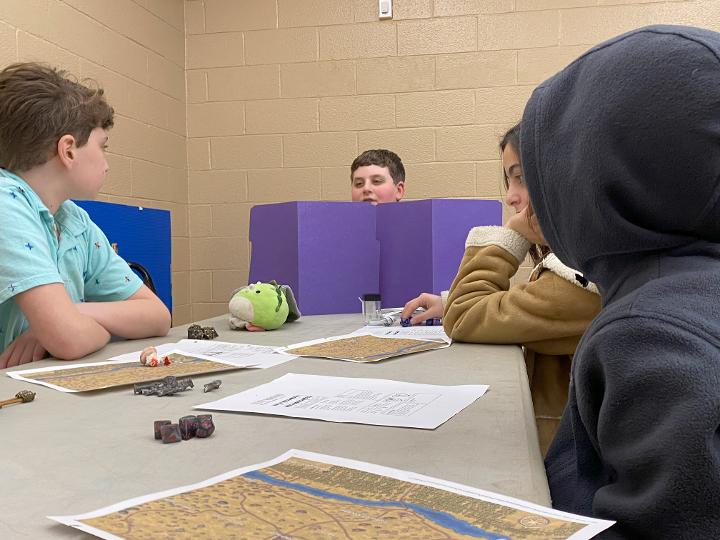
- A role playing game (RPG) is a communal game experience of interactive storytelling. One player, the Dungeon Master (DM) or Maggid (Storyteller), leads the other players through a story of adventure, challenges, and puzzles. The Maggid also is the person who sets the tone and explains the rules of respect and fair play that is expected from all players.
- Dungeons & Dragons (D&D) is the original role playing game (RPG) and its current version, 5th Edition, has brought fun tabletop adventures to millions.
- Jewish Dungeons & Dragons (JD&D) will use some of the foundational rules of traditional D&D, however the game will be changed. These changes will allow for players from a wider range of experience (i.e. a lack of experience), shorter individual sessions, and the insertion of Jewish cultural characters, historical background, and philosophical and spiritual concepts.
- JD&D sessions are run from a module featuring a crafted adventure, drawing inspiration from Jewish texts, historical figures, philosophical/mystical concepts, and legends.
- JD&D games are about teamwork. Players may not play using an “evil” alignment or engage in Player vs. Player (PvP) attacks. A DM's goal is to have every player involved and not to create a “total party kill”.
- Activities in the game will encompass roleplay, combat, puzzles, and text encounters, immersing players in a diverse range of experiences. This also allows for moments of success and engagement by different types of players. Combat and descriptions of cartoon style violence are typically part of the game. This can be developed to fit the desires of each individual group.
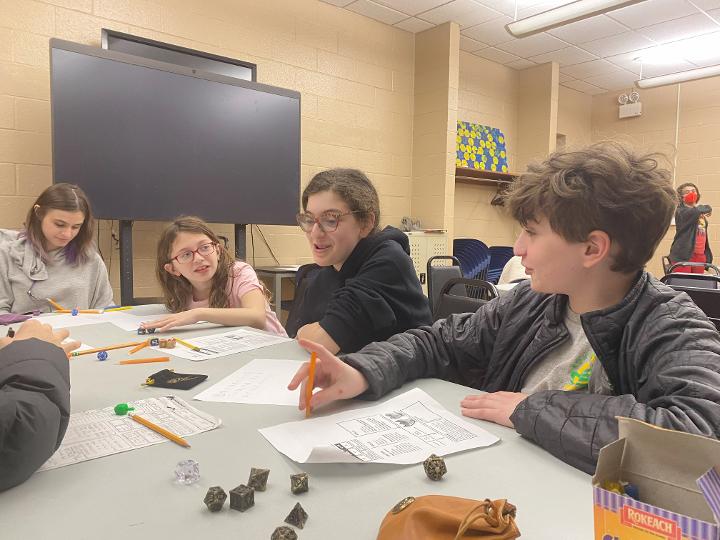
- Players will often use premade characters since sessions are too short to allow for full character creation. However, longer campaigns are possible that include character creation and leveling up.
- JD&D has received a grant from the Jewish Education Project and program support from the Mid-Westchester JCC.
- In 2023-2024, JD&D recruited 5 teens to become trained as DM's. Each of these teens was then able to lead their own table of JD&D adventures. Now in it's third year (2025-2026), the program has grown to 9 teens and dozens of players. Teens have used this experience as job references and community service hours.
- Games have been setup and run throughout North America, including New York, Ohio, Florida, and more locations.
- JD&D has been successfully led at summer camps including Camp Ramah of New England, and 6 Points Sci-Tech Academy.
Availble for:
- Single session events can be themed around a large variety of Jewish topics. Previous topics have included:
- Holidays (Purim, Chanukah, Passover, Lag B'Omer, Shavuot)
- Torah stories (Moses in Egypt, the Hebrews in the Wilderness)
- Important Texts (Shema, Ten Commandments, Blessings)
- Historical figures (Rabbi Akiva, Baal Shem Tov)
- Rabbinic and Medieval Legends (Golems, Amulets, Angels, Demons)
- Text skills (Chevruta, Translation, Intrepretation, Gematria)
- Larger events and programs
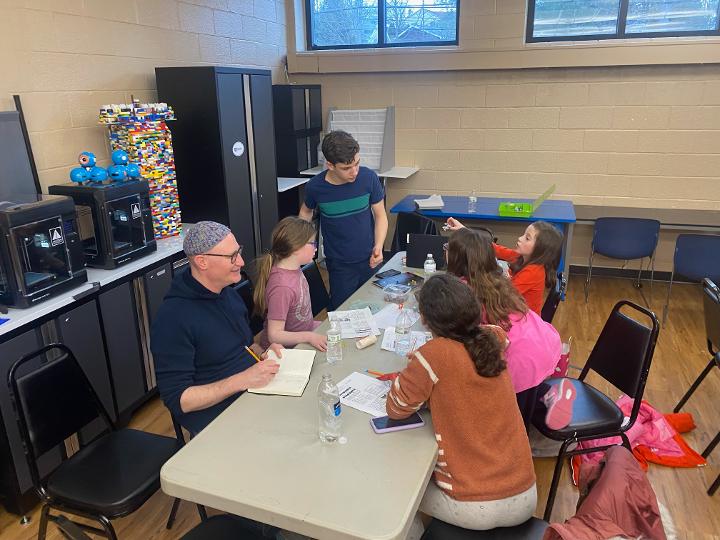
- We can bring multiple GM's to each lead a table of 4-6 players.
- Events can be strung together to form a campaign.
- Create your own program
- Train teens or others in your area
- Host discussions and events about Jewish gaming